Dyno Comparison: Stock vs. Overland Tailored Torque Tune for the Toyota Land Cruiser
11/4/20252 min read
Understanding the Dyno Comparison
The Toyota Land Cruiser, particularly the LX570 from 2008 to 2021, is revered for its robust performance and versatility. With the advent of superchargers, specifically the TRD/Magnuson supercharger, the enhancement in power output has sparked interest among enthusiasts. In this analysis, we will explore the differences between the stock Magnuson supercharger calibration and the Overland Tailored Torque Tune calibration, focusing on how they impact performance when running on 91 octane fuel.
Stock Calibration vs. Overland Tailored Torque Tune
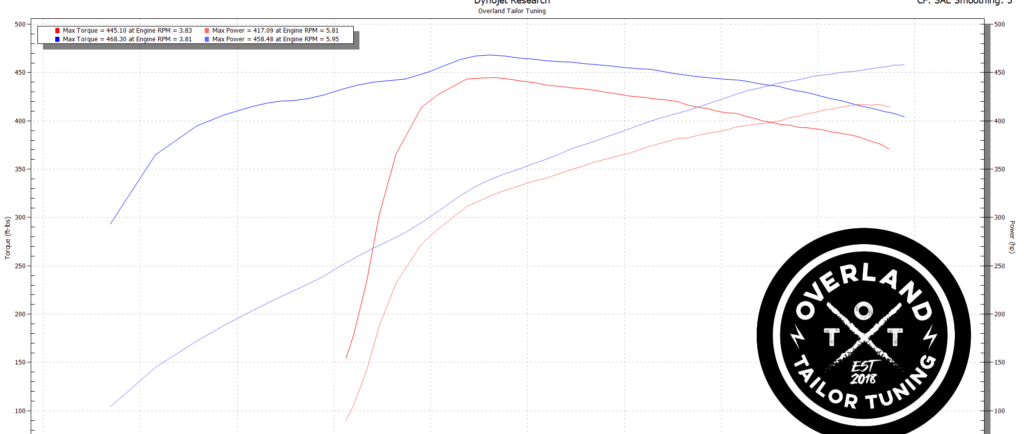
A thorough dyno comparison reveals distinct performance characteristics between the stock Magnuson setup and the Overland Tailored Torque Tune. The stock calibration indicates a baseline performance that many might find acceptable. However, the Overland Tailored Torque Tune aims to optimize not just power but also driveability and response, thereby enhancing the driving experience.
When operating under identical conditions, such as running 91 octane fuel, the stock tune displays a predictable power curve. On the other hand, the Overland tune, illustrated in the blue line of our comparison, showcases a significant increase in torque, particularly at lower RPMs. This increase provides additional pulling power, making the vehicle more capable during off-road excursions.
Impact on Performance and User Experience
Comparing the performance of both calibrations under the dynamometer reveals more than just numbers. The differences exhibited in the dyno comparison are essential for users seeking optimal performance from their Land Cruiser. While stock configurations offer reliability and a sense of security commonly expected from a high-end SUV, the tailored torque tune unlocks potential that can be especially beneficial for overlanding enthusiasts.
The Overland Tailored Torque Tune not only offers increased horsepower but also provides a smoother power delivery, resulting in enhanced throttle response. Enthusiasts who plan to tackle rugged terrains or demanding trails will gravitate towards this performance improvement. Moreover, fuel efficiency might also see minor enhancements due to improved combustion dynamics facilitated by the tuned setup.
Conclusion: Choosing the Right Calibration
Ultimately, the choice between the stock Magnuson calibration and the Overland Tailored Torque Tune depends on individual needs and preferences. For those who engage frequently in off-road activities or seek a thrilling drive, investing in the Overland tune presents an opportunity to transform the driving experience and enhance the vehicle’s capabilities. In contrast, if the focus is on maintaining factory specifications with peace of mind, the stock configuration remains a reliable option.
In summary, our dyno comparison reveals that while the stock calibration ensures dependability, the Overland Tailored Torque Tune optimizes performance and user engagement, making it a compelling choice for Land Cruiser enthusiasts aiming for adventure.

Sign up to receive newsletters on upcoming changes and Tune Enhancements.
support
rEACH US
support@overlandtailor.com
Copyright © 2026 Overland Tailor Tuning, All rights reserved.
More info