Performance Comparison: 1G Tundra 4.7L Stock vs OTT 91 Octane Tune
11/4/20252 min read
Introduction to the 1G Tundra 4.7L Performance
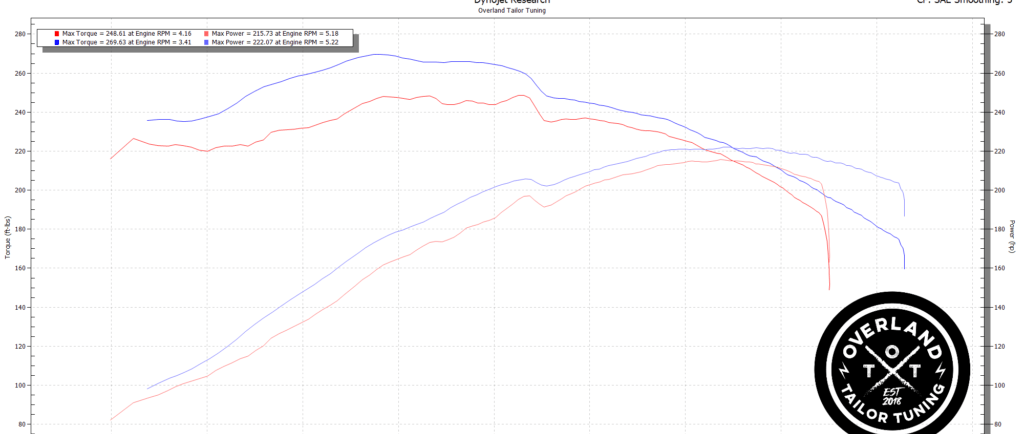
The Toyota Tundra model, particularly the 1st generation 4.7L V8, displays impressive engineering that is further enhanced through performance tuning. In this article, we analyze the dynamometer (dyno) graph that measures the horsepower (hp) and torque (ft-lbs) across the rpm range, comparing the stock performance against that achieved with an Overland Tailor Tuning (OTT) 91 octane tune. This comparative analysis provides insights into the tuning benefits for enthusiasts seeking to optimize their vehicle's performance.
Understanding the Dyno Graph
The dyno graph illustrates two key performance metrics: horsepower and torque. The stock configuration of the 1G Tundra 4.7L V8 is represented by the red lines, while the blue lines depict the enhanced performance brought about by the OTT tune. Notably, the stock engine achieves a maximum power output of 215.73 hp at 5180 rpm and a peak torque of 246.61 ft-lbs at 4160 rpm.
Peak Improvements with OTT Tuning
When applying the OTT tune utilizing 91 octane fuel, the enhancements are significant. The tuning process is designed to unlock the engine's potential, leading to measurable gains in both horsepower and torque. These improvements not only enhance the driving experience but also provide additional capabilities for towing and off-road adventures.
The critical insight from the dyno results emphasizes the peak gains attributed to the 91 octane tune. By examining the data closely, we can observe that the performance metrics for the OTT tuned vehicle surpass the stock configurations, demonstrating that a carefully engineered tune can significantly elevate the vehicle's operational efficiency.
For Toyota Tundra owners considering performance modifications, recognizing the differences between stock and tuned configurations is vital. The enhancement in horsepower and torque contributes to a more powerful engine response during acceleration, ultimately resulting in improved performance across various driving conditions. Thus, transitioning to an OTT tune could be a beneficial and transformative step for any 1G Tundra enthusiast.
In conclusion, the comparison between the stock 1G Tundra 4.7L V8 performance and that of the OTT 91 octane tune showcases the substantial advantages provided by tuning. This alteration not only boosts power figures but also enriches the overall driving experience. Enthusiasts who wish to push the boundaries of their Tundra's performance should consider exploring such tuning options for optimized vehicle capability.

Sign up to receive newsletters on upcoming changes and Tune Enhancements.
support
rEACH US
support@overlandtailor.com
Copyright © 2026 Overland Tailor Tuning, All rights reserved.
More info