Dyno Comparison: Stock vs. Overland Tailor Torque Tune for the 2007-2009 Toyota FJ Cruiser
11/4/20252 min read
Understanding Dyno Comparisons
Dyno comparisons serve as a vital tool for automotive enthusiasts to assess the performance of vehicles under various tuning configurations. In this analysis, we focus on the 2007-2009 Toyota FJ Cruiser equipped with a 1GR-FE (4.0L V6) engine. We will closely examine the differences between the stock calibration and the Overland Tailor torque tune, providing insights into how these calibrations impact the vehicle’s power output and overall efficiency.
Stock Calibration Performance
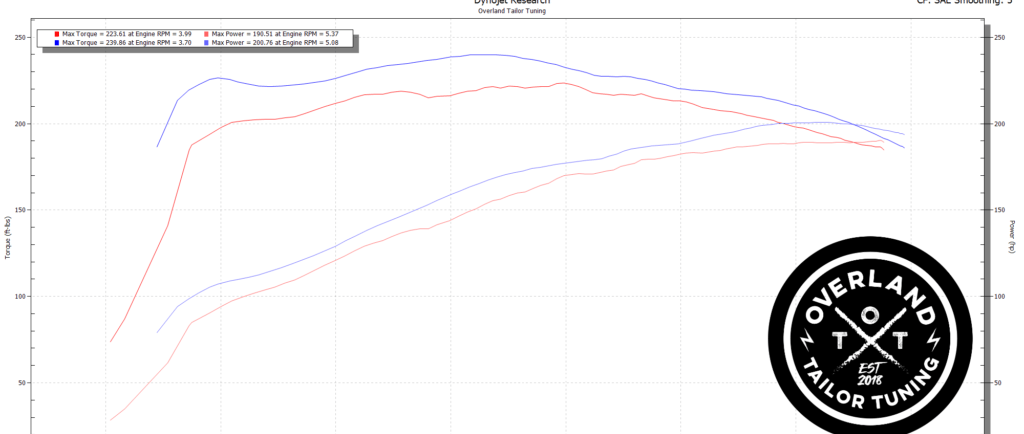
The FJ Cruiser’s stock calibration was designed primarily for reliability and fuel efficiency. When operating with 91 octane fuel, the stock configuration allows the vehicle to perform within its expected parameters. The red line on the dyno chart illustrates the engine's performance in its standard state. While the stock tune provides a solid experience for everyday driving and trails, many enthusiasts seek areas of improvement, particularly in torque delivery and responsiveness during off-road excursions.
Overland Tailor Torque Tune Benefits
In contrast, the Overland Tailor torque tune presents a more aggressive mapping strategy that optimizes engine performance for both on-road and off-road conditions. The blue line on the dyno chart showcases the vehicle's output after applying the Ott calibration, which is also run on 91 octane fuel. The enhancements made by this tuning option are notable; drivers can expect increased torque across a broader RPM range, thereby improving acceleration and overall drivability in challenging terrains.
The torque tune not only enhances performance but also addresses some common needs of overland adventurers by providing better throttle response and power delivery. This is particularly significant for users who regularly face steep inclines or require quick acceleration on uneven surfaces.
Comparative Analysis of Results
When comparing the two configurations, a few key distinctions emerge. The stock setup, while dependable, is outperformed by the Overland Tailor tune in terms of torque and horsepower, especially in practical applications. The results of the dyno comparison indicate that the tuned engine can deliver power efficiently, ensuring that every ounce of octane is utilized optimally.
Moreover, the Overland Tailor torque tune brings a level of customization that allows drivers to tailor the performance characteristics of their FJ Cruiser to suit their unique driving styles and demands. For those who venture into the wild, the advantages gained through this tuning can transform a stock vehicle into a capable off-road machine.
Conclusion
In conclusion, the dyno comparison between the stock calibration and Overland Tailor torque tune for the 2007-2009 Toyota FJ Cruiser reveals significant advantages in performance tuning. As off-road enthusiasts continue to demand more from their vehicles, understanding these differences can empower them to make informed decisions about enhancements and modifications. Whether it's for everyday driving or off-road confidence, the right tuning can make all the difference.

Sign up to receive newsletters on upcoming changes and Tune Enhancements.
support
rEACH US
support@overlandtailor.com
Copyright © 2026 Overland Tailor Tuning, All rights reserved.
More info